The Gap Between Keynote and Commercial Return
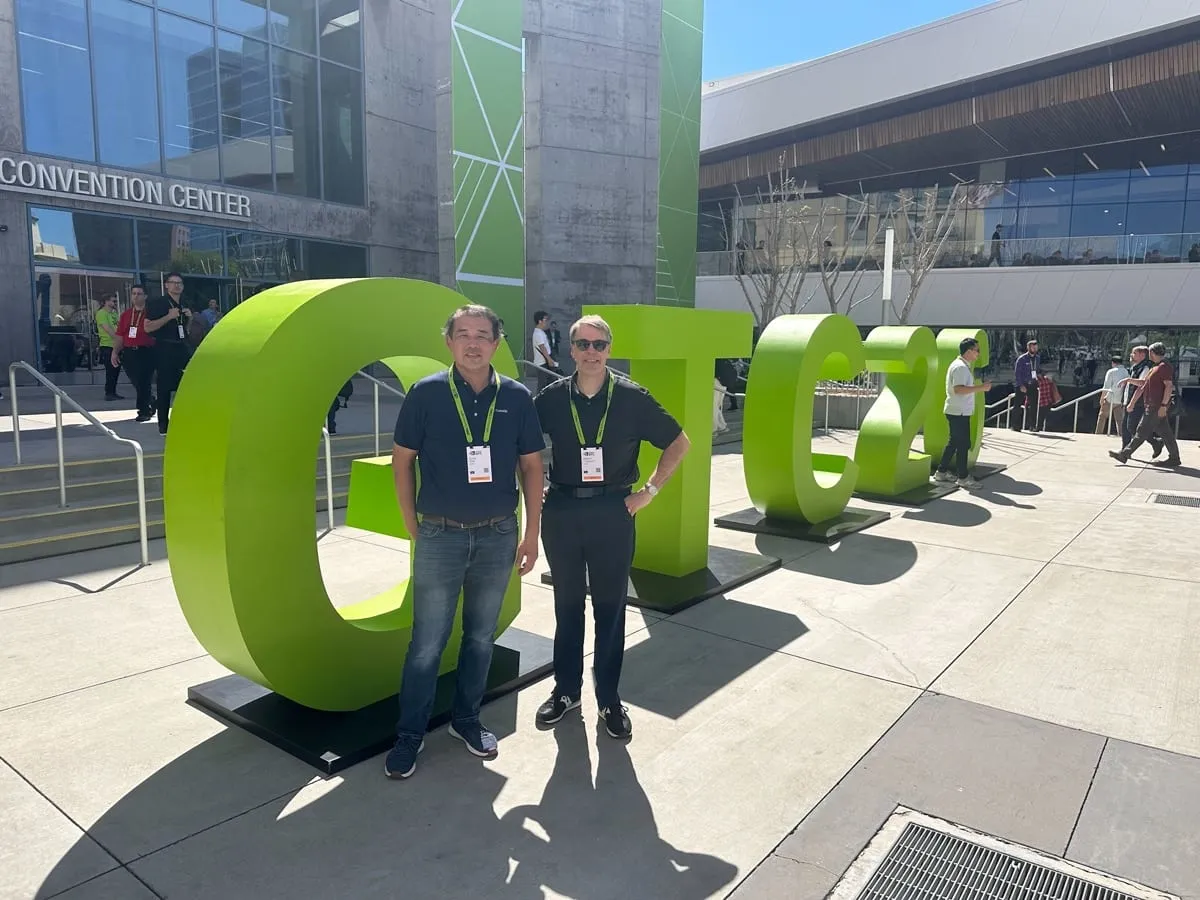
The gap between Silicon Valley announcements and tangible commercial return is where most digital initiatives falter. At GTC 2026, Jensen Huang delivered a sweeping three-hour vision from the SAP Center in San Jose — and the message was unmistakable: the era of simply treating AI as a conversational chatbot is over. We have entered the era of the AI factory.
According to McKinsey's 2024 State of AI report, 72% of organisations now use AI in at least one business function — yet fewer than 20% report enterprise-wide deployment. The bottleneck is not the technology. It is the data and governance architecture on which agentic systems depend.

What Is Agentic AI — and Why Does It Change Everything?
The most commercially disruptive announcement at GTC 2026 was not a chip — it was an operating model. Generative AI is evolving into Agentic AI: systems that do not merely answer questions, but autonomously plan, reason, and execute multi-step workflows without continuous human instruction.
NVIDIA spotlighted OpenClaw — the rapidly growing open-source operating system for agentic computers — and launched NemoClaw, an enterprise-grade reference stack designed to make these agents secure, auditable, and horizontally scalable at production throughput.
The commercial reality: autonomous agents require pristine, governed data to act safely. If your underlying data architecture is fragmented — siloed across ERPs, SCADA systems, and spreadsheets — deploying a NemoClaw agent will simply automate your existing inefficiencies at scale. The immediate priority is establishing an isolated, secure data foundation that these agents can actually trust.
Inference Overtakes Training: The Vera Rubin Era
Computing demand is skyrocketing, but the nature of that demand is fundamentally changing. The focus has decisively shifted from training massive foundation models to inference — running them efficiently and continuously in real-time production environments.
To address this inflection, NVIDIA unveiled the Vera Rubin supercomputer platform — purpose-built for agentic AI workloads — alongside the new Vera CPU and the Groq 3 LPU. By integrating token acceleration technology, NVIDIA is drastically reducing both the latency and the cost-per-inference of running large language models at scale.
Goldman Sachs projects that generative AI could raise global GDP by 7% over the next decade — but only for organisations that can operationalise it. The rapid decrease in inference costs driven by platforms like Vera Rubin means that always-on AI monitoring is now commercially viable for mid-market manufacturers, not just hyperscalers.
The commercial reality: NVIDIA is no longer selling GPUs — it is selling entire compute factories. To capitalise on hardware efficiencies like the Groq 3 LPU, your engineering teams must modernise data pipelines to handle high-throughput, low-latency processing. Raw compute is only as valuable as the data infrastructure it operates on.
Physical AI: From the Screen to the Shop Floor
While enterprise software received a substantial upgrade, physical AI stole the visual spotlight at GTC 2026. Driven by the Cosmos world simulation models and Isaac robotics platforms, NVIDIA made clear that autonomous physical systems — from warehouse robotics to self-driving fleets — are reaching commercial maturity.
The underlying technology has immediate applications for manufacturing and heavy industry right now. Digital twins and synthetic data generation — two of the Isaac platform's core capabilities — allow AI models to be trained in physically accurate, simulated environments before deployment in production lines. This represents a significant risk-reduction strategy for capital-intensive operations.
IDC forecasts that global spending on digital twin technologies will reach $73.5 billion by 2027. Organisations that establish simulation-first validation processes now will hold a structural advantage as physical AI deployment accelerates through 2026 and beyond.
Translating GTC 2026 into Enterprise Action
The frameworks announced at GTC 2026 validate the commercial efficacy of agentic and physical AI. But execution depends entirely on robust data engineering and a clear-eyed assessment of your current infrastructure readiness. To capitalise on these shifts, organisations should prioritise three actions:
- Audit Your Data Governance — Assess whether your current infrastructure is secure, structured, and governed sufficiently to support autonomous AI agents like NemoClaw. Fragmented data produces fragmented decisions, at machine speed.
- Re-evaluate Inference Costs — With platforms like Vera Rubin and Groq LPUs driving down the cost of real-time AI, identify specific processes — quality inspection, demand forecasting, maintenance scheduling — where continuous AI monitoring is now commercially viable for your business.
- Run Targeted Agentic Pilots — Launch tightly scoped pilot programmes focused on agentic workflows, ensuring they are tethered directly to measurable commercial objectives. Broad transformation programmes rarely succeed; proof-of-value at process level does.
The blueprint for the next decade of enterprise AI was laid out in San Jose. The organisations that act on infrastructure readiness now — before the wave of agentic deployment — will be the ones that capture the value, not just the headlines.
"Stop thinking of AI as a tool you query, and start thinking of it as an integrated capability that executes tasks. Deploying a NemoClaw agent on fragmented data will simply automate your existing inefficiencies at scale."
DataQI GTC 2026 Analysis
Ready to act on GTC 2026?
Discover how DataQI helps you build the governed data foundation that agentic AI systems actually need to operate safely.
Start the conversation"The rapid decrease in inference costs means always-on AI monitoring is now commercially viable — not just for hyperscalers, but for mid-market manufacturers."
GTC 2026 Key Facts
- 72% of organisations use AI in at least one function — fewer than 20% at enterprise scale (McKinsey, 2024)
- 7% global GDP uplift projected from generative AI over the next decade (Goldman Sachs)
- $73.5bn forecast for digital twin spend by 2027 (IDC)
- NemoClaw enterprise reference stack launched for secure, scalable agentic deployment